
ESSENCE OF COLOR
- deepikagupta20
- Dec 14, 2020
- 8 min read
Updated: Dec 28, 2020
INTRODUCTION:
As the name suggests, this whole project is based on exploring various tints and shades of a color along with finding the reasons behind the use of that particular color.
PRE-WORK:
We all were asked to choose a particular color and look for various objects in our surroundings that associated with that color.
The color I chose was 'blue' because it is my second favourite color after black. If I talk about aesthetics, I think that this color has the most variety of tints and shades as it is a primary color. For me this color symbolizes calmness, security and pride. Being used in the National Flag it also has a patriotic emotion attached to it.
The objects associated with blue color:










DAY 1: COLOR EXTRACTION
The brief for the day included making color swatches of the selected objects identifying the hues and shades and giving a unique name to the original swatch. We also had to list the reasons as to why that particular object is of that color.
OBJECT 1: RIN BAR
Final color name: MIDNIGHT PRUSSIAN BLUE

OBJECT 2: LAY'S PACKET
Final color name: MAUVY BLUE

OBJECT 3: PARACHUTE COCONUT OIL
Final color name: FADED BLUEBERRY

OBJECT 4: UJALA FABRIC WHITENER
Final color name: MAUVIGO

OBJECT 5: EZEE
Final color name: TURQUOISE AZURE

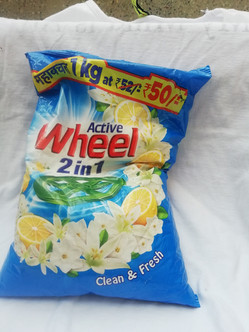
OBJECT 6: DETERGENT POWDER
Final color name: NOT ANY BLUE

OBJECT 7: VICKS INHALER
Final color name: SAPPHIRE INDIGO

OBJECT 8: PEACOCK
Final color name: LAPIS BLUEY


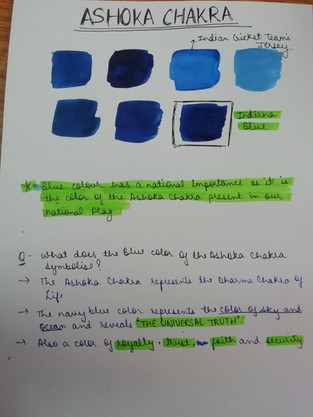
OBJECT 9: ASHOKA CHAKRA
Final color name: INDIANA BLUE



OBJECT 10: FROZEN
Final color name: FLAKEY BLUE


OBJECT 11: BLUE WHALE
Final color name: ATLANTIC TURQUOISE


OBJECT 12: HARPIC CLEANER
Final color name: INDIBLU

OBJECT 13: OREO
Final color name: SAPPHIRE TWIST

OBJECT 14: DORAEMON
Final color name: DORA HUE


OBJECT 15: TWITTER LOGO
Final color name: TWEETY TEAL



DAY 2: COLOR IN SIGHT
Today I saw a documentary on the details of color in design. It made me realize how each color evokes its own message and appeals to our mind in different manners. The most beautiful language in the world is that of the color. Isn't it interesting how a color for some maybe just a representation of a brand whereas for the other, it might be associated with a childhood memory. The fact that 95% of our influences with color are emotional and only 5% are rational shows the effect color has in our lives.
While watching the video, I realized that there were a lot of similarities between my inquiries about the color and the content of the video. During the video, when I saw that shoe designed for the Jamaican Athlete I realized that color sometimes has such an impact on our minds that it may either boost our confidence or lower it to the failure level.
INDIVIDUAL COLOR ASSOCIATIONS:

READING OF THE DOCUMENT:
We were assigned into groups of two and were asked to read a directory and make notes. I and Aanvi chose the first reading document on 'The Diversity of Color: an analysis on cross-cultural symbolism'.
INTRODUCTION:
COLOR IS OFTEN CONNECTED TO DIFFERENT CULTURAL ELEMENTS, THIS STUDY IS INTENDED AS A CONTRIBUTION TO ADVANCING CROSS-CULTURAL UNDERSTANDING IN A GLOBALIZING WORLD. THE HYPOTHESIS STATES THAT THE COLOR IS PERCEIVED TO BE SYMBOLIC OF VARIOUS LIFE EVENTS SUCH AS WEDDINGS, BIRTHS, AND DEATHS AS WELL AS EMOTIONS SUCH AS HAPPINESS OR SADNESS, WILL VARY BASED ON A PERSON’S CULTURAL GEOGRAPHIC ORIGIN
− ELEVEN BASIC COLOR TERMS WERE DETERMINED BY BERLIN AND KAY (1969){they proposed some basic color terms}.
− ALL HUMAN BEINGS MAKE AN UNCONSCIOUS JUDGMENT ABOUT A PERSON, ENVIRONMENT, OR ITEM WITHIN NINETY SECONDS OF INITIAL VIEWING AND THAT BETWEEN 62 PERCENT AND 90 PERCENT OF THAT ASSESSMENT IS BASED ON COLOR ALONE.
− MORE THAN JUST A VISUAL PHENOMENON, COLOR HAS EMOTIONAL AND CULTURAL DIMENSIONS THAT CAN ENHANCE COMMUNICATION EFFORTS.
LITERARY VIEW ON THE UNDERSTANDING OF COLOR:
TAKING INTO CONSIDERATION THE STATEMENT OF RESEARCHERS GIVEN BY THE PORTUGESE , JAPANESE AND ENGLISH AUTHORS WE CAN DEEPLY UNDERSTAND THE DOMINANCE OF COLOR IN THE HUMAN CULTURAL SOCIETY:
⎯ COLORS CAN EVOKE AN EMOTIONAL RESPONSE AND THEREFORE REPRESENT FEELINGS OR MAJOR LIFE EVENTS.
-Every language has a word for both black and white. A third color term, if it exists in the language, is always red. The fourth and fifth terms interchangeably are green or yellow with the sixth being blue and the seventh brown. After brown, each language will include pink, orange, purple, and grey in varying orders. These eleven colors were the colors utilized in the present study.
THE RESEARCH WORK TO PROVE THE THEORY OF CULTURAL DOMINATION OF COLORS:
⎯ COLOR SYMBOLISM WAS MEASURED BY ASKING THE PARTICIPANTS TO INDICATE WHICH ONE OF THE ELEVEN BASIC COLORS.
⎯ EACH QUESTION STATED, “WHAT COLOR DO YOU PRIMARILY ASSOCIATE WITH” FOLLOWED BY ONE OF THE FIFTEEN CONSTRUCTS (HAPPINESS, ANGER, CONTEMPT, DISGUST, SADNESS, FEAR, SURPRISE, BIRTH, WEDDINGS, DIVORCE, WEALTH, POVERTY, WORK, EDUCATION, AND DEATH).
⎯ THE RESPONSES TO THESE QUESTIONS DETERMINED WHAT COLOR EACH CULTURAL GROUP PRIMARILY DEEMED TO BE SYMBOLIC OF THAT CONSTRUCT PROVING THE FACTOLOGY OF THE STUDY WE HAVE BEEN DISCUSSING KEENLY ABOUT.
TWO VARIABLES-
- Dependent- color symbolism, the quality of hue, saturation, and brightness of an object as used for or regarded as representing elements of human life such as emotions and major life events
- Independent- cultural geographic origin, is defined as the beliefs, customs, arts, etc., of a particular society, group, place, or time as belonging to or characteristic of a particular region from which a person originates contempt, disgust, happiness, birth, and wealth: As these are things which vary in expression from culture to culture, it is understandable that the symbolism attributed to them will also vary based on culture.
THE RESULT:
THE RESULT OF THE STUDY SEEMED DIFFERENT WITH THE PEOPLE OF DIFFERENT STATUS OF SOCIETY BUT TAKING ON POINT THE EMOTIONAL OUTLOOK THE RESULT THAT CAME AS ONE WAS.
“A CULTURE WHICH IS MORE RESERVED ABOUT SHOWING EMOTIONS MAY HAVE A MORE SUBDUED OR NEGATIVE PERCEPTION TO THE SYMBOLISM ATTRIBUTED TO THESE EMOTIONS. IN CULTURES WHERE EMOTIONS ARE FREELY DISPLAYED, PERCEPTIONS OF COLOR MAY CHANGE ACCORDINGLY”.
In future response, “no color connection” response should be added, so that participants are not forced to make any random choice. A complication faced in this study was that of individuals who are influenced by multiple cultures. This influences people’s perceptions of symbolism through their exposure to ‘foreign’ ideas and acceptance of a more global portrayal.
THE READING OF MY PEERS:
1. Understanding color psychology through culture, symbolism, and emotion: by Lavanya Jain and Nikita.
color is more of subjective rather than objective , it is used for communicating information and creating emotion. we have several questions rising when we see color from holistic point of view like, what is psychology of colors? how color affects our brain ?how culture has an impact on color? symbolism impacted by color ? in brief I concluded , we all perceive each color differently , our mood can be influenced by the color, light and sorroundings.it effects our brain deeply for example green - blue colors are considered to be better healing minds , railway stations in japan has been painted blue in ordered to reduce suicide and now 75% of suicides on railway have been decreased . culture is foundation of life and our lifestyle and it effects our color choices too , we have different cultures Asians , middle east , European, American, etc. These cultures preserve colors to show the values of each culture individually. color in Buddhist flag.
Blue (Nīla): The Spirit of Universal Compassion
Yellow (Pīta): The Middle Way
Red (Lohita): The Blessings of Practice — achievement, wisdom, virtue, fortune and dignity
White (Odāta): The Purity of Dhamma — leading to liberation, timeless
Orange (Manjesta): The Wisdom of the Buddha’s teachings
The sixth vertical band, on the fly, is made up of a combination of rectangular bands of the five other colors, and represents a compound of the other five colors in the aura’s spectrum. This compound color is referred to as the Truth of the Buddha’s teaching Pabbhassara (‘essence of light’).
Most of the time Buddhist wear white color dresses when going to temples to show simplicity and purity. The color blue represents infinity and in meditation, the color blue is considered to calm the mind and help to achieve wisdom. symbolism is representation of power , organization or anything influential. they know how create emotions through it , different logo, branding is changed time to time . which helps and support them to market . comic book industry showcase the various colors showing negative and positive characters , good guys fight against the bad ones , super hero - red yellow , blue . villain - green, orange , violet . some colors are exception the natural and unnatural tones is use to display both villains and superheroes red- warm blue - cool yellow-positivity the comic industry uses primary colors because it is easy to print . the people are reminded of things when they are discussing with color. Some associate the color blue with sadness, loneliness and removing all attachments with people. In order for us to choose the right colors for our audience we need to understand them better, not just their geographical location or device they’re using, but them — where they come from, what they believe in, what they care about and what matters to them most.
DAY 4: UNDERSTANDING DIFFERENT DIMENSIONS OF COLOR
HARRY POTTER AND THE DEATHLY HALLOWS PART 2:

DAY 5:
TASK 7:
1. How color behaves on different materials and surfaces?

2. How color behaves under different light sources and conditions?

3. How one color visually interacts with other colors?

4. How the perception of meaning/communication of color changes with the density of pigment?

TASK 8: SURVEY
In this task we were asked to create a google form inquiring about how others perceive a specific color.

When asked about how they perceive a navy blue shade of color, most of them associated it with calmness and wisdom due to its symbolism of the national flag. There was a very less amount of people (1 person) who associated it with safety.
Out of 35, 10 people associate it with purity while nobody associated it with anger.

While doing the analysis, I found that most of the people who associated blue color with hygiene also associated it with purity in the previous question.

Color do play an important role in animations. When asked about what is the color of the famous cartoon character Donald Duck, most of them got it right.
However, despite being such a famous character, many people got confused as they were not able to differentiate between the different shades of blue.

It is true that the symbolism of color changes with different cultures across the world. Since India is a diverse nation, so I decided to inquire about its symbolism among different Indian cultures.
Since the majority of people in India are Hindus, 28 out of 35 people associated it with the Hindu mythological deities. While for some it symbolized pride and nationality, for the others it was a color of good fortune according to their culture (mostly Christians)
REFLECTIVE WRITING 2:
This project was very exciting for me because as a painter my whole life revolves around colors. During the course of this project, I learnt how each color evokes its own message and how each color is an expression of various emotions one goes through.
While making the color swatches, I realized that how by just changing its saturation or brightness one may decipher different meanings out of it. The same color (blue) can have a negative impact on our minds when seen in a darker shade which is in complete contrast to a light shade of blue symbolizing calmness. The most interesting thing during the tasks was the behavior of color on different mediums and their reaction to different light sources. Color has a very strong impact on our minds and that is why filmmakers choose their color palette accordingly. The way each color is assigned to a particular character in animation is itself a testimony to the fact how it affects our perception of that color. I think that the context of the color also affects its perception. For example, the color blue is a symbol of bravery when seen in context of Ashoka Chakra whereas the same color becomes a symbol of danger when seen in context of Hercules.
I believe that the symbolism of color varies according to a person's geographical culture. Coming from a traditional Rajasthani family, there are certain colors in my culture that are considered to bring good fortune like red while some colors like black are associated with bad omen.
Nature has its own hues and shades which keeps changing according to different seasons. According to me color is the most beautiful language in the world. They form an essence of life. For me, it can brighten my day by adding a spruce of pastels in my grey skies.
REFERENCES:


Comments