
CULTURE & COMMUNITY
- deepikagupta20
- Oct 12, 2020
- 10 min read
Updated: Nov 27, 2020
INTRODUCTION:
Gangaur is a festival local to the marwari (Baniya) communities of Rajasthan and some parts of Gujarat and Madhya Pradesh as well. Celebrated by the women, this festival identifies the worship of Goddess Gauri (Parvati), wife of Lord Shiva.
HISTORY:
Once Lord Shiva along with Devi Parvati (Gauri) and Narad Muni went into a forest. As the news of their visit spread like wildfire in the nearby village community, the women of the upper caste occupied themselves with the task of preparing delicacies and offerings for the Gods and Goddess. Meanwhile the women of the lower caste approached them with their offerings. Devi Parvati and Lord Shiva accepted their offerings and ate all the food happily. In return the Goddess blessed the women with 'SUHAAG' items.
After some time, the women of the upper caste arrived with their food. As soon as Lord Shiva and Parvati had finished eating Lord Shiva asked Devi Parvati what she was going to give those women in return as she had already distributed all the Suhaag items among the lower caste women. Devi then cut the tip of her finger and blessed those women by sprinkling her own blood on them.
Since then the women of that community (particularly in Rajasthan)started celebrating 'GANGAUR' (Gana meaning Lord Shiva; Gaur meaning Devi Parvati/Gauri).
SIGNIFICANCE:
It signifies maternal fidelity, harvest, happy married life and child bearing. Married women perform the rituals for the well-being and longevity of their husbands while the unmarried women do so to be blessed with a good husband. The reason for celebrating it in the Chaitra month is that Chaitra month is a symbol of fertility and spring according to older traditions.
DAY 1:


REFLECTIVE WRITING 1:
Material and Non-Material Components in a Culture -
Material components of a culture are those physical things, for example, clothing, food, accessories whereas non-material components include the feeling aspect and abstract ideas, for examples, rules, ethics, morals, and beliefs.
As far as my understanding of these components is concerned, I believe that material things are the appearance or the outlook of an culture whereas the non-material things are more connected with devotion and reverie. Being an atheist child in a family full of traditions and customs, I never took any interest in knowing about the rituals. But my conception has been completely changed from the day of the Pre-task that not everything related to God is just a superstition but also a means of livelihood and prosperity. The constant searching for information and the fact that I was encouraged to question every belief was an eye opener for me. It made me realize the significance of the culture which I never knew existed.
The festival which I have chosen is 'GANGAUR'. It is a festival observed by the marwari communities of Rajasthan. The part which I found the most interesting was that almost every materialistic component is somehow related to non-materialistic component of the festival. For example, the fact that women wear red sarees along with mangalsutra, bindi, and sindoor (collectively known as Shringar) is a materialistic component but at the same time its signification of their 'Suhaag' and their belief that it will protect their husbands from bad omen is a non-materialistic component. Similarly, the use of musical instruments such as manjiras or dholak are physical resources and thus come under the category of materialistic things whereas the women's belief that it is a way of praying/calling to their God by immersing in his devotion and attaining trance like state is a part of non-materialistic component.
I believe that both the components are interrelated either directly or indirectly. "They are two halves of the same whole" - Jessica Verday
VOCABULARY:
Bindora - From the eighth day day of the festival, all the women goes to one woman's house, singing geet and dancing where the woman (host) serves them food and pays respect to them through gifts.
Chaitra - A month of the Hindu calendar which is observed between March and April.
Isar - Another name for Lord Shiva
DAY 2:
As soon as the day started we watched a clip from the film 'Gods must be crazy 1' and was asked to answer some of the questions it followed. The questions asked were:

The answer:


For Day 2, in the first activity we were asked to select a functional object and a second person as well who might have a different perspective about it and then we were asked to make a mind map by segregating the information using the 5W1H tool and also highlight the material and non material components.
So I chose a key because in my home as well it is my duty to lock all the doors every night and it has kind of become my responsibility. Then as the second person I chose a security guard since we both have different perspectives about it.
In the second activity we further segregated the information collected in Activity-1 under Text-Context-Subtext activity.
Below is the mind map I made for this object: LINK TO MIRO

REFLECT (a): One Object
The question:


Feedback given:


REFLECTIVE (b): Two Concepts
The question:

The answer:

REFLECTIVE WRITING 2:
The various components of a culture are symbols, language, beliefs, and norms. All the components are dependent on each other in some or the other way. A symbol used in a specific culture might depict their belief or the God which they worship. For example, in Christianity the symbol of cross is related with their belief in Jesus. Similarly, the symbol of sun in Hinduism shows God Sun in Hindu mythology.
If I put this in context of the object I chose which is Key then the key also has different symbolism in different community. Just like I mentioned earlier, the key for me is a security token whereas for the security guard belonging to a community of service providers, the key is a sense of responsibility. It even has a religious symbolism since St. Peter is shown holding a key in his hands which depicts the holiness and the divinity of the key.
So what I understood is that each culture is different in its own way and how even a small object could have such a huge significance for one while for the other it is not that important. All the components of a culture being dependent on each other and enhances each other's meaning.
DAY 3:
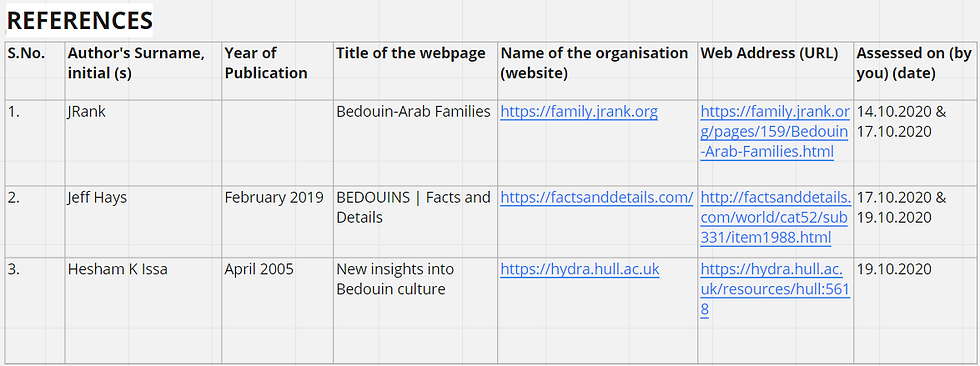
The community assigned to my group was Bedouin settled across the immense deserts and steppe-like lands of the Near and Middle East. What was most interesting about their culture was that while in the west wearing veil is considered as a punishment, the Bedouin women wear it as a part of their accessories providing a degree of elegance. The fact that for the people in this community their attachment to their traditions and belief is their means of survival shows how naturalized these humans are.
Miro link for this : https://miro.com/app/board/o9J_kiqunZc=/?moveToWidget=3074457350778557539&cot=14

We were given a home task in which we had to research about a specific domain of the community.

DAY 4:
The day was a continuation of the previous day where we researched about the lifestyles of different communities assigned to us. While working in the group we had to draw out insights on how practices in the identified domains are reflective of norms and beliefs of the community as a whole.

REFLECTIVE WRITING 3:
The lifestyle of a community is reflective of its culture in many ways. While culture of a community can be defined as customs and beliefs, lifestyle is a way of living life. It is easy to change a person's lifestyle but not his culture. The link between these two concepts is that while culture includes customs, beliefs, values, and many other social aspects, a lifestyle is influenced by these very components. For example, the Bedouins live in the arid regions of Arabia which has influenced their lifestyles that can be seen in their tradition of dromedary breeding. Similarly the clothes they wear on a daily basis are reflective of their belief in Islam. While in the west the veil is considered as a punishment, the Bedouin women wear it with pride, symbolic of their culture.
A lifestyle is a part of a culture. Within a single culture, there can be people who have different lifestyles, for example, the Bedouin community is spread across the semi-arid and arid areas of Arabia, Syria and Sahara desert belonging to only one culture but having differences in their lifestyles due to their location and climatic conditions. Bedouin tribes of Sahara and Arabian deserts practice camel/dromedary breeding but those near the cultivated regions of Jordan, Syria, and Iraq practice sheep or goat rearing for their livelihood but they all share a common culture i.e. their belief in Islam.
An individual can change his lifestyle, but it is difficult to do so in the case of an entire culture because it is a part of the individual, a sense of belongingness and his cultural identity. 'Modernism' and the 'evolution of technology' are the two main aspects which causes a change in a person's lifestyle. Let us take an example from my lifestyle and culture. I am a Hindu (baniya) belonging to a small village in Rajasthan where technology is not that famous. When I moved to the main city with my parents our lifestyle completely changed. We no longer had to go to the well to fetch water; instead of making food on the choolah we started using gas stove. The one thing that has remained constant was our belief in our God, our respect for the traditions and celebrating the festivals in the same manner because that is who we are, a part of the 'Hindu Baniya' community and nothing will ever change that.
Culture and lifestyle are two inter-related concepts in the study of human society. They both play an integral part in shaping one's identity. While the lifestyle influences the daily routine of a person, culture on the other hand evolves a person by influencing his behavior and beliefs. Culture is root or foundation of an individual's personality while the learning that comes from changing lifestyles is what makes the ladder to reach to the top.
DAY 5 :
In the morning we were asked to make a collage showing different types of clothing according to different environment.

After that we explored the concept of beauty in our own community along with the reasons as to why these specific things are considered beautiful.

GROUP WORK:

REFLECTIVE WRITING 4:
Relationship between context and the concept of beauty:
Concept is a basic idea or a starting point of something while Context is the situation or the environment in which a concept develops. The same is with beauty. The concept of beauty in general term is something that gives aesthetic pleasure or is attractive but it differs from region to region. The concept of beauty changes if put in reference to the context of a particular region/culture. For example, in India fair complexion is considered beautiful but on the other hand, in British countries people find the tan brown color attractive and beautiful.
The concept of beauty in my Hindu culture is wearing a saree or an ethnic dress adorned with jewellery and applying henna on the palms whereas the women in the Bedouin community wear the traditional muslim 'Burkha' decorating their eyes with 'Kohl'. For the Bedouins the veil is an accessory which adds elegance and they even decorate it with beads. But if we look in my community the accessories which adds up to the beauty of a women are Bindi, Henna, anklets and bangles which also signify an Indian women's 'suhaag'.


Despite the differences there are some similarities too. Applying Kohl (in Bedouin) or Kajal (in Hindu Marwari) in the eyes is a common thing which is supposed to make the eyes look more expressive and attractive. Being a Marwari community belonging to arid areas of Rajasthan, our camels are like our prize possessions and decorating them is another way to reflect another concept of beauty that is the beautiful the camel is, the beautiful is the community. The Bedouins also take pride in their camels and even host a 'Camel Pageant'.


The context and concept of beauty share a one way relationship in which one(context) influences the other(concept). For a concept to be meaningful, it is important to have a context through which the analysis can be done.
DAY 6:
With the last day, we've now come to the end of the project. Our whole journey starting from our local festival has now come to an end with inquiring about the norms and beliefs of the various community that I as an individual belong to.
Here is the Miro Link

Detailed information on the individual communities:
Here is the link to Miro

FINAL REFLECTIVE WRITING:
Most individuals in today's world are looking for a community to rely on. While most people need to be part of a community for the needs of life, some choose to be part of a community because being part of a group of people who share something more important than geographic location is indescribably lovely.
The major communities that have influenced some aspects of my life are:

ATHELETE: The belief that both teammates should always shake each other's hands after a match to congratulate them on their good performance is something that always affected an aspect of my life that is 'being down to earth.' Playing volleyball has made me understand the meaning of 'team spirit.' It has inculcated essential leadership skills in me.
MARWARI BANIYA: It is a belief in our custom that we should do 'surya namaskar' everyday and also touch the feet of the elders to show respect. It creates an aura of positivity, encouraging me to face my problems with a smile by giving me a peace of mind and motivating me to make the right decisions. As someone once said "The trees that stand straight with pride are often cut down easily", touching the feet of elders taught me to be compassionate and modest.
ARTIST: There isn't a better way to express your emotions than art as it gives you freedom. For me art is a way to escape the harsh reality and be lost in my own imagination. It has widened my horizon and allowed me to look at the world with different perspectives. Being an important part of my life since childhood, it has made me know that "the whole world is black and white, that's how you see it'.


All these beliefs have had a positive role in making me who I am today. But there are certain beliefs which I disagree. The norm that after marriage women are expected to behave in a certain manner and be submissive is completely unjustified. Everybody irrespective of their gender has a right to freedom. The tasks a woman performs are more difficult than that of a man's but they are still denoted as housewives. The 'pardah system' has snatched away their individual identities. It is ironic how a woman who binds the whole family together doesn't even have the right to sit on a couch in front of the male elders of the house.


There are moments when you face a dispute between the two communities' values. In my case, it was between me becoming an artist and belonging to the Baniya community. It is a preconceived idea among the Baniya community that people who are interested in art and design are not good at academics, and have no career. As an academically talented child, my parents were disheartened when I chose to pursue design as a profession. They still think I should have opted for engineering or CA just like my other cousins. My belief is that "follow your passion and ultimately you will find success" and I have faith in me that I will prove them wrong and change their perspective.
Culture and community is an integral part of our lives. It transforms a person into what he is today as an individual. By creating a community, we have placed some order in this fractured world.
IMAGE REFERENCES:

FLYER PROJECT:
Main page

Cover Page

Front page (folding)


Comments